
PRODUCT R&D
Defined.Engineered.Realized.
Once the concept is defined, the project enters its first phase toward launch.
Designers and engineers work in close collaboration to define the structure and overall direction of the new creation.
Starting from a blank slate, engineers translate ideas into CAD software, ensuring a seamless and precise progression from design to development.
Every component is conceived as a bespoke element rather than an off-the-shelf part.
Each screw, detail, and exact dimension is individually planned and meticulously defined.
RELENTLESS PASSION, DRIVEN TOWARD PERFECTION.
From the creation of a single pair of glasses, countless cycles of structural validation, deconstruction, and reconstruction unfold. Working within a single structure, we relentlessly pursue the perfect balance between form and function-down to the very end. Every element is refined through repeated experimentation and verification, as all that is unnecessary is methodically stripped away. Through this uncompromising process, layer by layer, eyewear unique to Albrecht Dürer comes to life.


ENGINEERING THE BALANCE
Once the design is finalized, the project enters a dedicated prototyping phase to validate the chosen technical solution. This is not the production of a mere sample, but the physical substantiation of the design's underlying logic. The initial prototypes, developed from precise 3D engineering data, serve as the foundation for verifying structural integrity, load distribution, and stress flow across every joint. Through successive handcrafted iterations, tolerances are progressively reduced to microscopic thresholds, and each mechanism is rendered in full dimensional clarity.
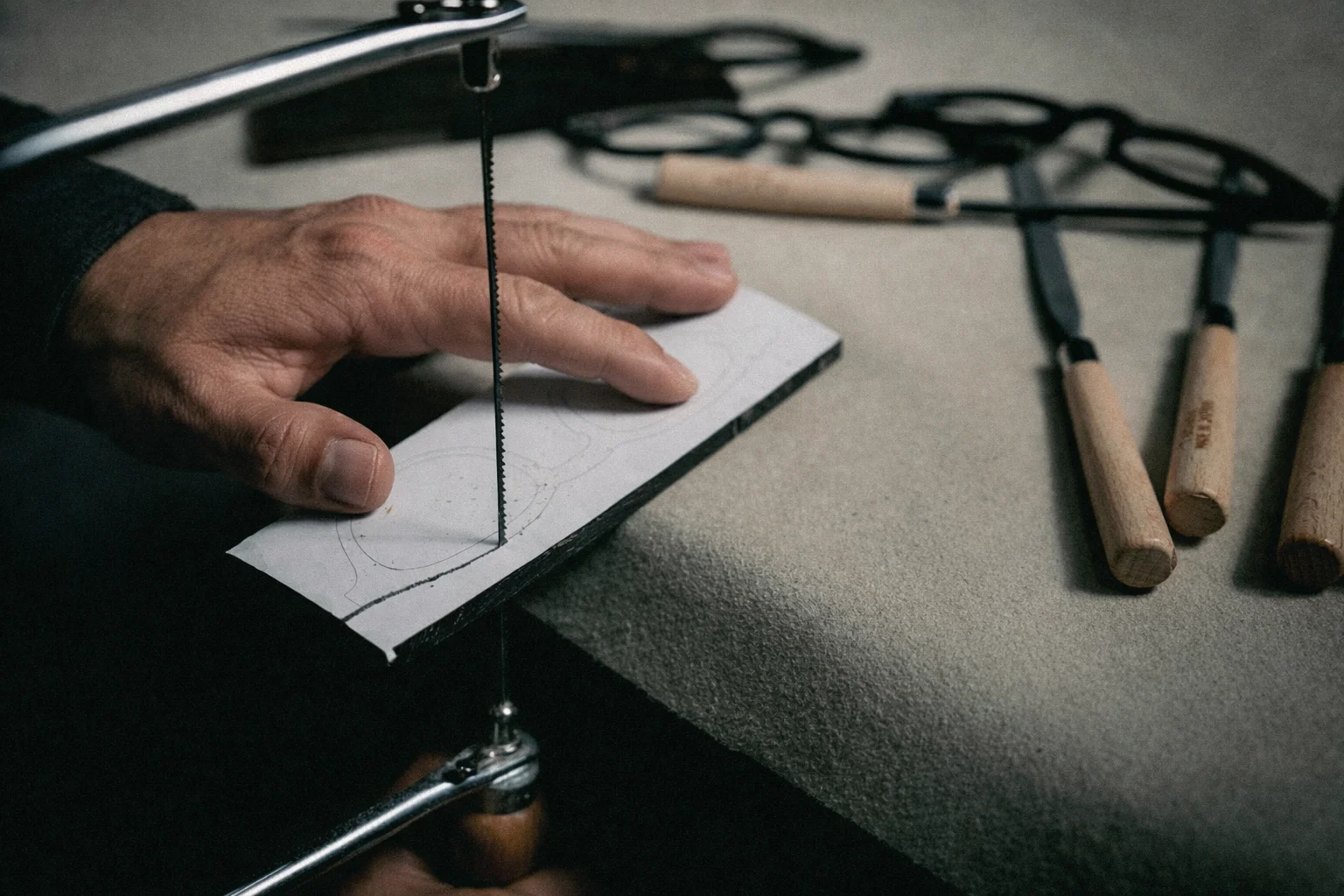
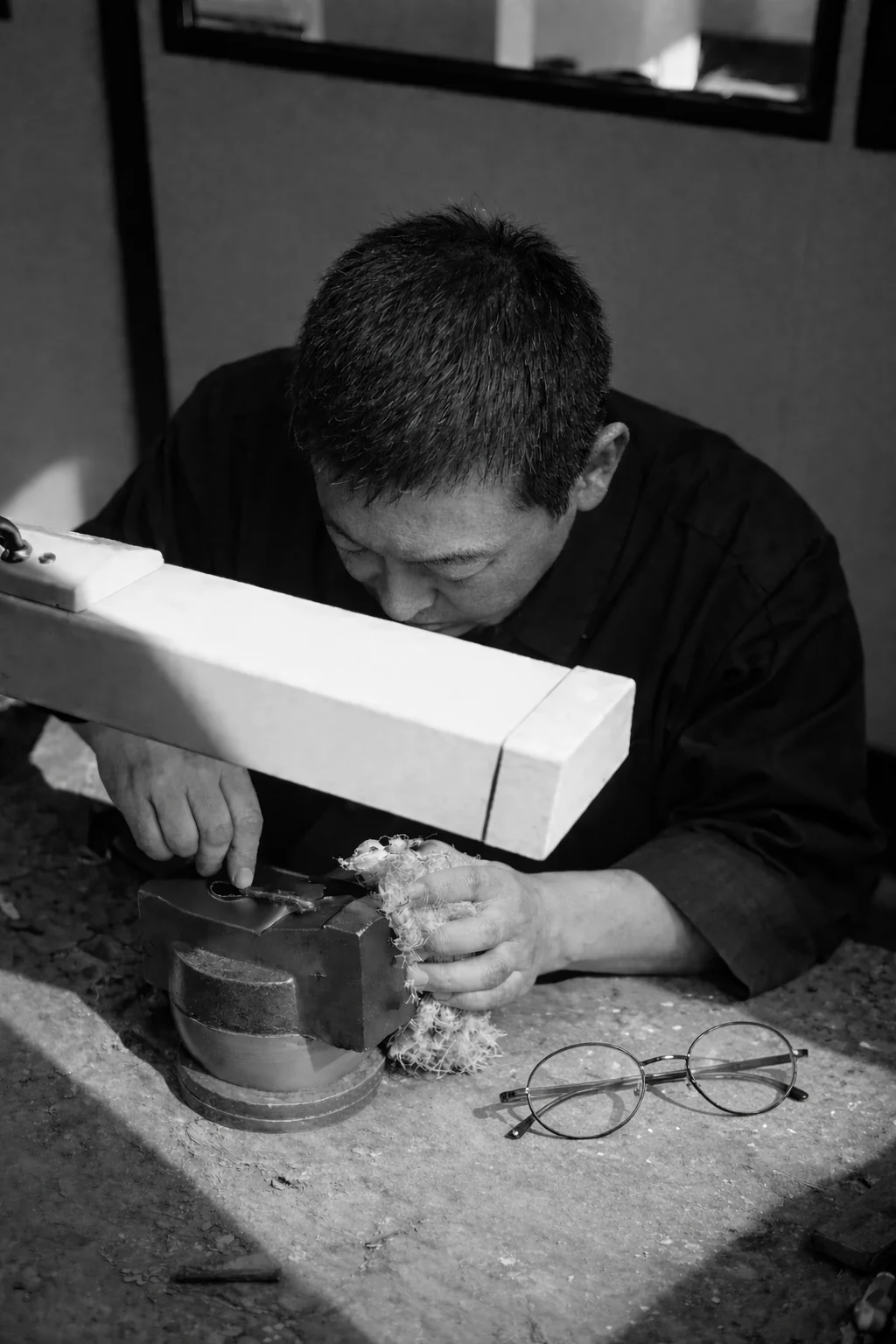
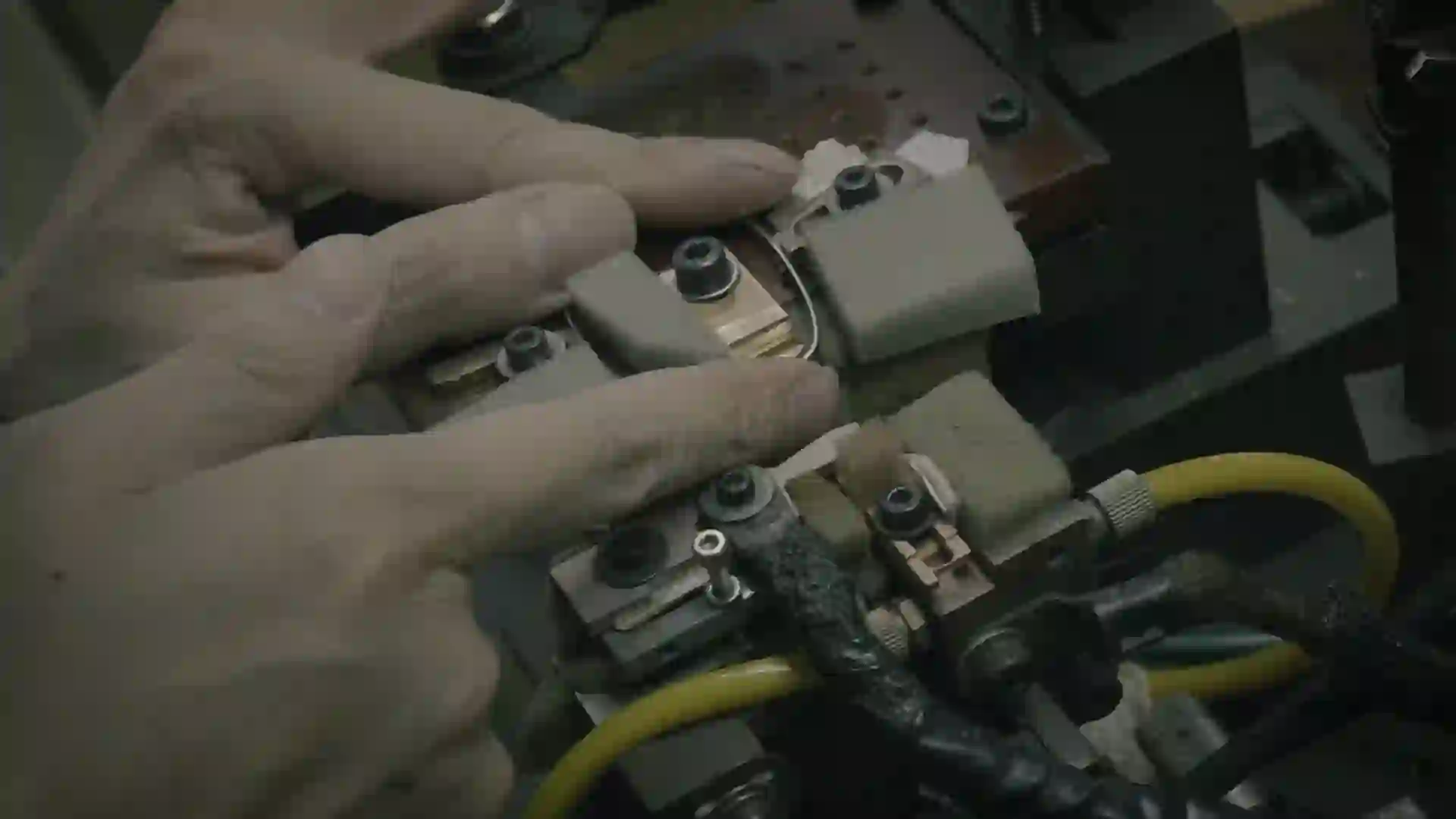
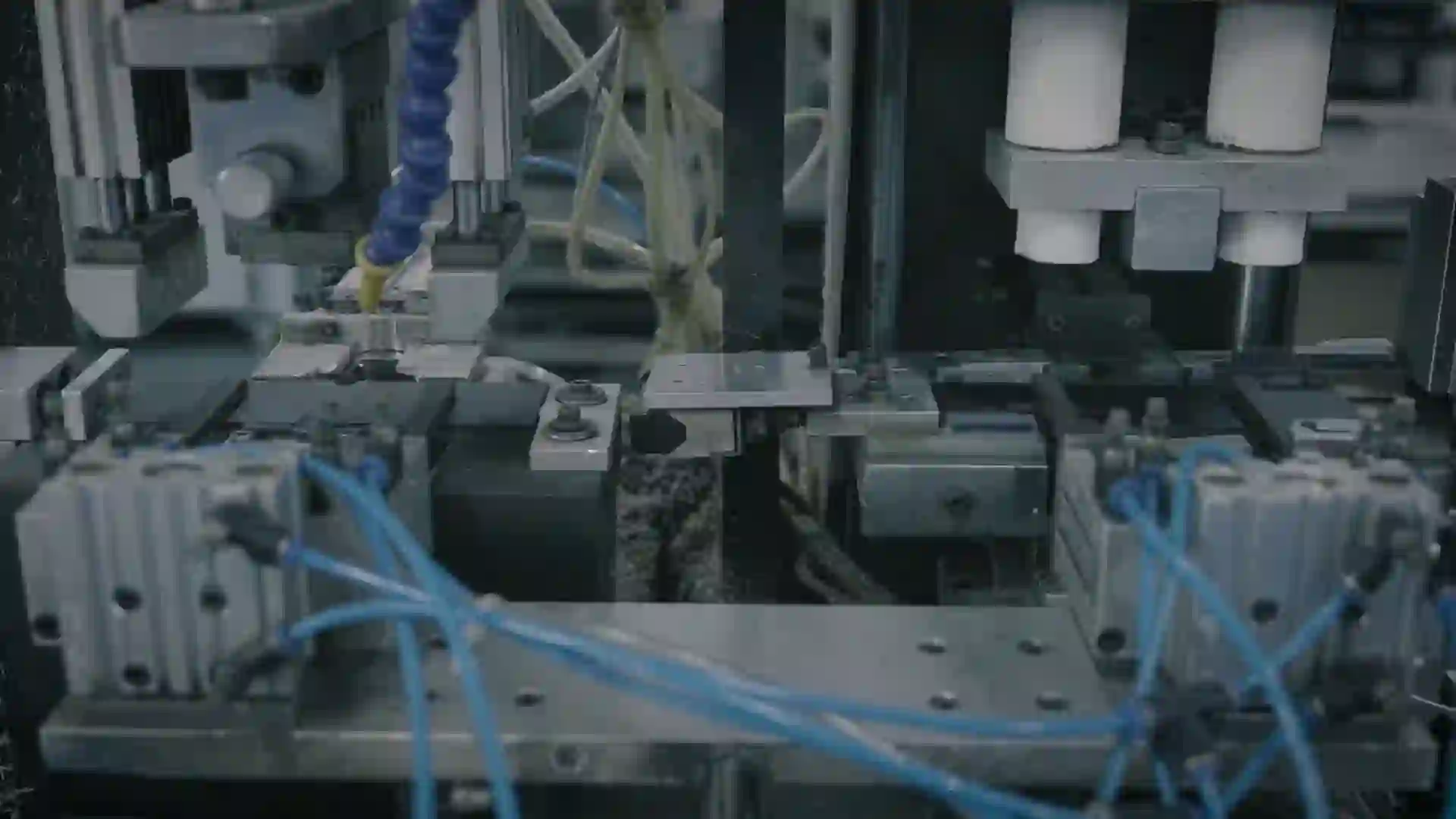
The hinge articulation angle, the calibrated tension of the temples, the elastic recovery of the frame, and even the subtle pressure distribution generated during wear are quantified and analyzed. At every stage, the equilibrium between structure and function is reassessed. The superfluous is eliminated. Only the essential architecture remains. The accumulated mastery of artisans does not rely solely on tactile intuition. Advanced machining systems, three-dimensional measurement technologies, and controlled surface-finishing processes converge to ensure that every parameter is objectively verified. Perfection is defined at the intersection of sensibility and data
MANUFACTURING
KŌDO TECHNICA
